The Importance of a Good Past in Building a Decent Future
by Alina Andrei
Această expoziție ar putea să aibă mai multe titluri alternative, cum ar fi: Desire Paths, Fake It Till You Make It sau Sometimes, everything is bullshit. Desire Paths este un termen folosit în urbanism, și se referă la traseele create intuitiv de trecători, de obicei pe spații verzi, atunci când aleg să meargă pe unde este mai scurt, în loc să urmeze aleile asfaltate. În lumea artei ar putea fi vorba tot despre scurtături, mai exact despre căile cele mai simple de a atinge un succes mai mult sau mai puțin relativ. Spoiler alert: nimeni nu le știe cu adevărat, ca rețetă universal valabilă. Am ajuns să mă ocup de un mic spațiu de artă (deja de 9 ani) din întâmplare – doar pentru că m-am mutat în Cluj și într-o zi am ieșit la bere cu niște oameni faini (pe care nu-i cunoșteam bine), și-am povestit (nu mai știu ce și de ce).
Anul trecut, căutând informații despre mine pe ChatGPT, am aflat cu surpriză că o serie de fanzine de-ale mele s-ar afla în colecția de la The Metropolitan Museum of Art. Informația era, este și probabil va fi falsă. Pornind de la acest pretext, mi-am construit singură un trecut și un viitor artistic fictiv, fără speranța unor realizări concrete palpabile (în ciuda titlului expoziției).
Cu ani în urmă am cunoscut o artistă care vindea picturi cu castelul Bran, suveniruri ieftine pentru turiști, și mereu spunea că are lucrări în colecții private în peste 20 de țări. Și nu mințea, în adevăratul sens al cuvântului, pentru că acele suveniruri ajungeau în casele străinilor care vizitaseră castelul. Ceva îmi spune că vindea mai mult după ce își ținea discursul. Suma strânsă pe lună era destul de decentă – de aici și expresia Fake It Till You Make It.
Despre ce NU este această expoziție: despre „manifestare”, despre ideea că îți poți transforma dorințele în realitate prin focalizare mentală, vizualizare și afirmații. Nu cred că cineva poate să ajungă să expună la MoMa, TATE sau Pompidou doar prin manifestare, însă în sens opus, știu că ajută dacă un artist a expus deja la mari muzee, galerii. Dar cum ziceam, sometimes, everything is bullshit. În termen de succes artiștii se compară cu unii care sunt mai sus și tot mai sus, iar publicul larg tinde să judece valoarea unui artist în funcție de milioanele de euro cu care se vând (sau nu) lucrările acestuia. Iar în marea schemă a lucrurilor, uneori e vorba doar despre supraviețuirea de pe o zi pe alta. Emoțional și/sau financiar. Succesul poate însemana (și) plata chiriei la timp, bani pentru pâine și brânză cu 50% reducere (vânzare accelerată), sau o zi întreagă fără anxietate cronică. Succesul mai poate însemna să-ți iasă o dungă neagră perfectă, poate cea mai bună dungă care s-a pictat vreodată pe pânză – motivul suprem de mulțumire (fericire!?) al unui artist din Cluj pe care-l știu.
Mulți artiști și-au fabricat singuri legende personale, care cu timpul au fost percepute ca fiind reale. A mers Brâncuși pe jos, desculț, tot drumul până la Paris? Se pare că nu. Autobiografia artistului care își fabrică trecutul pentru a-și legitima prezentul poate fi o formă de self-branding avant la lettre. E mai puțin important dacă e de bine sau de rău, până la urmă contează ce convinge.
Frank O’Hara, cunoscut drept „un poet printre pictori”, a lucrat o vreme la Museum of Modern Art din New York. Cred că a vândut bilete în holul de la intrare, iar ulterior a devenit curator. Dacă mi-aș inventa o biografie mi-ar plăcea să spun că Frank O’Hara (care a murit cu mulți ani înainte de a mă naște) a vrut să expună o lucrare de-a mea, poate o instalație paper-cut cu oameni buimaci care aleargă și dansează. Undeva la etajul 2, într-un colț spațios dar nu foarte, foarte larg, dar că s-a întâmplat ceva în ultimul moment. Ceva nespecificat clar. Poate că s-au rătăcit lucrările pe aeroport (e posibil să fi ajuns la Lost & Never Really Found Baggage), dar n-o să știm niciodată concret ce anume, ci doar că un indiciu ar fi fost ascuns în poezia „Why I Am Not a Painter”, ori în „Having a Coke with You”.
Alina Andrei
BIO
Alina Andrei este o artistă multidisciplinară născută în Brașov, stabilită în Cluj-Napoca, activă de mai mulți ani în zona artelor vizuale. Practica ei explorează relația dintre intimitate și spațiul public, punând în dialog fragmente de realitate cu ficțiune și memorie. Lucrările sale iau adesea forma unor instalații, publicații de artist, obiecte în ediții limitate sau intervenții care chestionează convențiile sociale, politice și culturale. Uneori, atunci când nu fotografiază oameni din carne și oase, folosește pentru lucrările ei ciment, decupaje din hârtie și jucării ready made. Printr-o abordare personală, Alina Andrei propune o privire critică și
sensibilă asupra lumii în care trăim. De asemenea, de 9 ani curatoriază expoziții la spațiul White Cuib din Cluj-Napoca, fiind și custode în același spațiu.
Expoziții personale (selecție): “Why women choose the bear“ (KulturTandem/ Heidelberger Chapel/ Heidelberg/ Germania, 2025) “Late summer afternoon, just before winter“(Subsol/Cluj,2025) “Don’t be fooled by the fake smile“(Rubik/Atelier4,Cluj, 2024) “Câteva secunde mai târziu, n-o să-ți amintești lumina care ți-a atins fața exact la ora 5:30 după amiază“ – (Artă NonStop, Sibiu, 2024). Expoziții de grup (selecție): “NOW IS THE TIME TO UNDERSTAND MORE“(For Mat, Trencin,Slovacia,2026), “Națiune absolută“ (INTERIM Temporary Contemporary Space,Iași,2026), “Unbreaking News” by Matca Arspace (Cejla Gallery, Brno, Cehia,2025), “Un trecut care nu trece.Comunismul și moștenirea sa artistică”(Muzeul de Artă Brașov,2025) “Istorii la Istorie”(Muzeul Național de Istorie, București,2025), “DOMESTIC”/Batra2025(Galeria Parter,Cluj, 2025), “Homemade Lemonade(Institutul Francez/Cluj,2025), “La Bine și La Rău/Through Thick and Thin”(Matca Arspace/Contemporar,Cluj, 2025), OPENING EXHIBITION (THE FACT FINDER, Berlin,Germania 2017), “BEING MOUNTAINS, BEING SEAS“(Lateral Art Space, Fabrica de Pensule, 2017).
EN
The Importance of a Good Past in Building a Decent Future
This exhibition could have several alternative titles, such as Desire Paths, Fake It Till You Make It, or Sometimes, Everything Is Bullshit.
Desire paths is a term used in urban planning to describe the routes intuitively created by pedestrians, usually across green spaces, when they choose to take the shortest way rather than follow paved paths. In the art world, it could also be about shortcuts—more precisely, about the simplest ways of achieving a more or less relative kind of success. Spoiler alert: no one really knows what they are, at least not as a universally valid recipe. I ended up running a small art space (for nine years already) more or less by accident—simply because I moved to Cluj and one day went out for a beer with some nice people (whom I didn’t know very well), and we talked (I no longer remember what about, or why).
Last year, while looking up information about myself on ChatGPT, I was surprised to discover that a series of my fanzines was supposedly part of the collection of The Metropolitan Museum of Art. The information was, is, and will probably remain false. Taking this as a pretext, I built myself a fictional artistic past and future, without any hope of concrete, tangible achievements (despite the title of the exhibition).
Years ago, I met an artist who sold paintings of Bran Castle—cheap souvenirs for tourists—and who always said that she had works in private collections in more than 20 countries. And she wasn’t really lying, in the true sense of the word, because those souvenirs did indeed end up in the homes of foreigners who had visited the castle. Something tells me she sold more after giving her little speech. The amount she made per month was quite decent—which is where the expression Fake It Till You Make It comes in.
What this exhibition is NOT about: manifestation, the idea that you can turn your desires into reality through mental focus, visualization, and affirmations. I don’t believe anyone can end up exhibiting at MoMA, Tate, or the Pompidou simply through manifestation. On the other hand, I do know that it helps if an artist has already exhibited at major museums and galleries. But, as I said, sometimes, everything is bullshit.
When it comes to success, artists compare themselves to those who are higher up, and then higher up still, while the general public tends to judge an artist’s value according to the millions of euros their work sells—or doesn’t sell—for. And in the grand scheme of things, sometimes it is simply about surviving from one day to the next. Emotionally and/or financially.
Success can mean (also) paying the rent on time, having enough money for bread and cheese at 50% off (quick sale), or getting through an entire day without chronic anxiety. Success can also mean getting a perfectly straight black line right—perhaps the best line ever painted on canvas—the ultimate reason for satisfaction (happiness!?) for an artist from Cluj whom I know.
Many artists have fabricated their own personal legends, which over time came to be perceived as fact. Did Brâncuși walk all the way to Paris barefoot? Apparently not. The autobiography of the artist who fabricates their past in order to legitimize their present can be seen as a form of self-branding avant la lettre. Whether it is good or bad is ultimately less important; what matters, in the end, is what convinces.
Frank O’Hara, known as “a poet among painters,” worked for a while at the Museum of Modern Art in New York. I believe he sold tickets in the entrance lobby, and later became a curator. If I were to invent a biography for myself, I would like to say that Frank O’Hara (who died many years before I was born) wanted to exhibit one of my works—perhaps a paper-cut installation with dazed people running and dancing. Somewhere on the second floor, in a spacious but not very, very large corner. But then something happened at the last minute. Something never clearly specified. Perhaps the works got lost at the airport (they may have ended up in Lost & Never Really Found Baggage), but we will never know exactly what happened. All we would know is that a clue had been hidden somewhere in the poem Why I Am Not a Painter, or perhaps in Having a Coke with You.
Alina Andrei
BIO
Alina Andrei is a multidisciplinary artist born in Brașov and based in Cluj-Napoca, who has been active in the visual arts for several years. Her practice explores the relationship between intimacy and public space, bringing fragments of reality into dialogue with fiction and memory. Her works often take the form of installations, artist publications, limited-edition objects, or interventions that question social, political, and cultural conventions. At times, when she is not photographing real people, she uses cement, paper cut-outs, and ready-made toys in her work. Through a personal approach, Alina Andrei offers a critical yet sensitive perspective on the world we live in. For the past nine years, she has also curated exhibitions at White Cuib in Cluj.
Solo Exhibitions (selected): Why Women Choose the Bear — Kultur Tandem / Heidelberger Chapel, Heidelberg, Germany, 2025; Late Summer Afternoon, Just Before Winter — Subsol, Cluj, 2025; Don’t Be Fooled by the Fake Smile — Rubik / Atelier4, Cluj, 2024; A Few Seconds Later, You Won’t Remember the Light That Touched Your Face at Exactly 5:30 in the Afternoon — Artă NonStop, Sibiu, 2024.
Group Exhibitions (selected) NOW IS THE TIME TO UNDERSTAND MORE — For Mat, Trenčín, Slovakia, 2026; Absolute Nation — INTERIM Temporary Contemporary Space, Iași, 2026; Unbreaking News, by Matca Artspace — Cejla Gallery, Brno, Czech Republic, 2025; A Past That Won’t Pass: Communism and Its Artistic Legacy — Brașov Art Museum, 2025; Histories at History — National History Museum of Romania, Bucharest, 2025; DOMESTIC — Batra 2025, Galeria Parter, Cluj, 2025; Homemade Lemonade — French Institute, Cluj, 2025; La Bine și La Rău / Through Thick and Thin — Matca Artspace / Contemporar, Cluj, 2025; Opening Exhibition — The Fact Finder, Berlin, Germany, 2017; Being Mountains, Being Seas — Lateral Art Space, Fabrica de Pensule, Cluj, 2017.
https://www.facebook.com/events/1521381266421931/

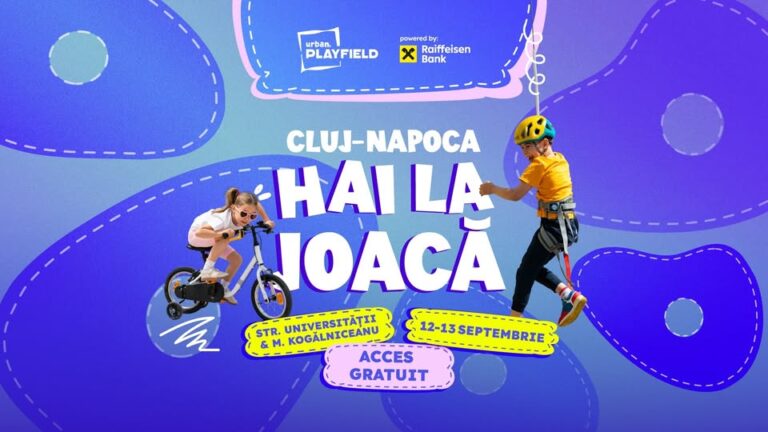 sâm, 12 sep • 10:00Urban Playfield I Cluj-Napoca, hai la joacă!Strada Universității, 400091 Cluj-Napoca, România
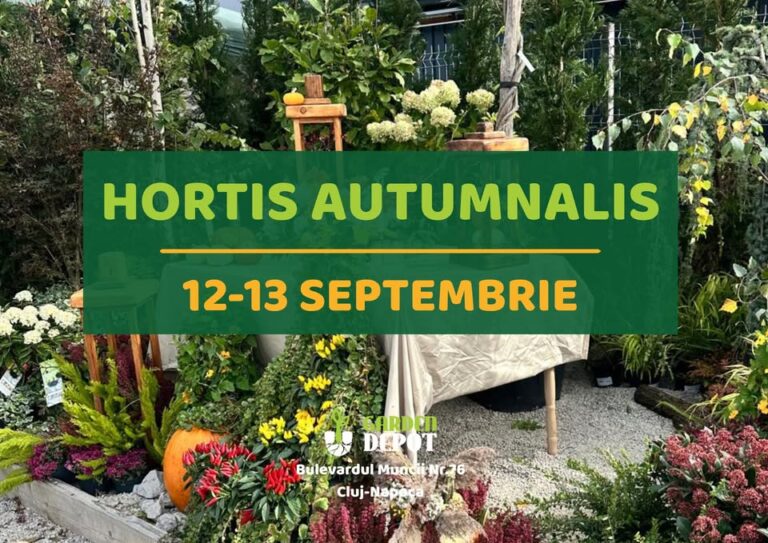 sâm, 12 sep – dum, 13 sepHORTIS: Autumnalis, Ediția a 6-aBulevardul Muncii 76, 400641 Cluj-Napoca, Romania
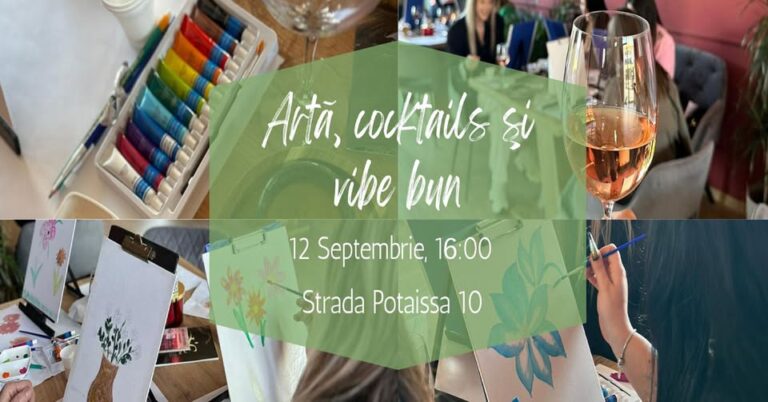 sâm, 12 sep • 16:00Paint and Drinks – farmecul toamnei 🍂Antidot
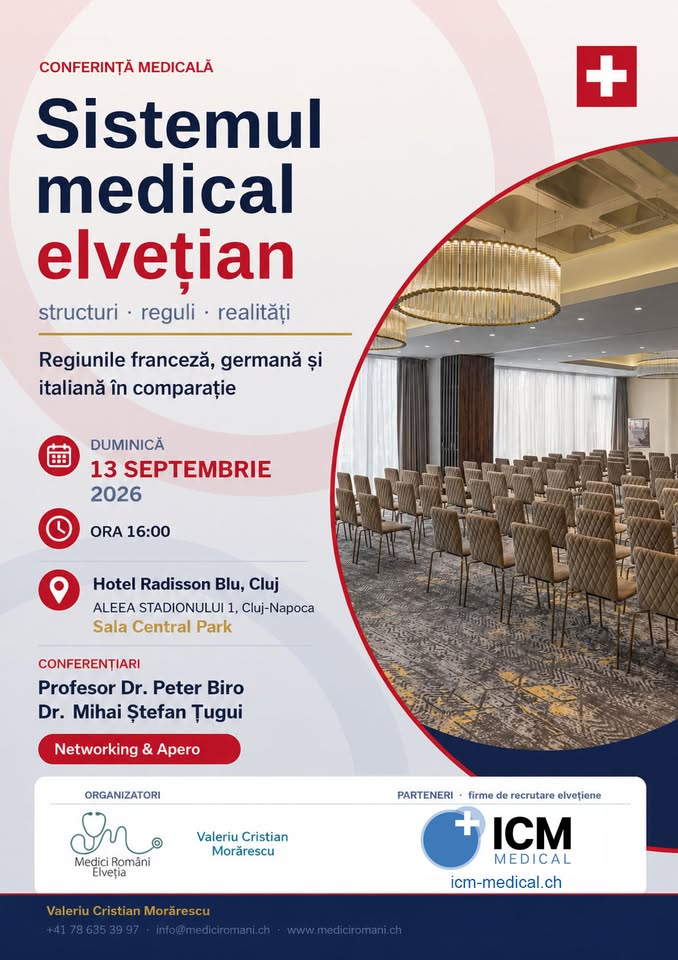 dum, 13 sep • 16:00Conferinta Cluj | Sistemul medical elvetian: structuri, reguli si realitatiAleea Stadionului 1, 400375 Cluj-Napoca, România
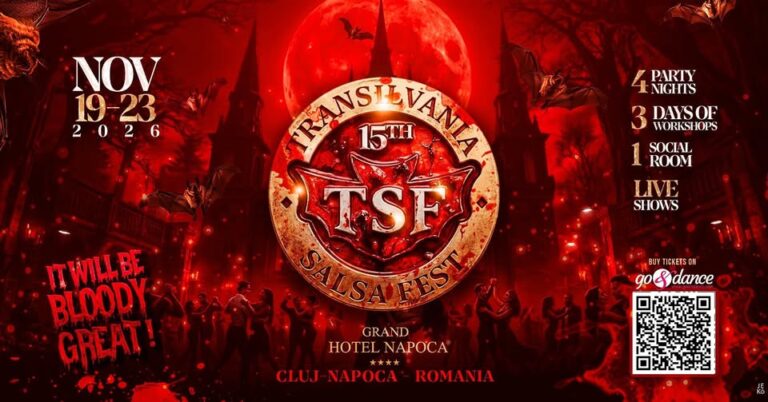 joi, 19 noi – lun, 23 noi15th Transilvania Salsa Fest, 19-23 Nov 2026, Cluj-Napoca, Romania☆☆☆Grand Hotel Napoca
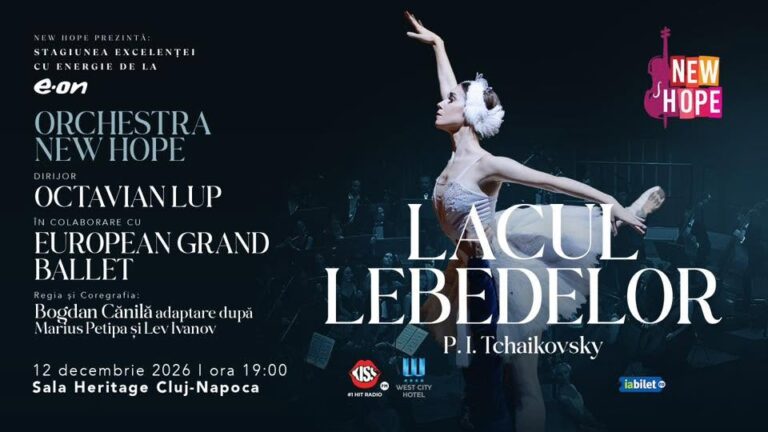 sâm, 12 dec • 19:00“Lacul Lebedelor” – Balet și orchestră Live în Cluj-NapocaSala Héritage - ANMGD Cluj
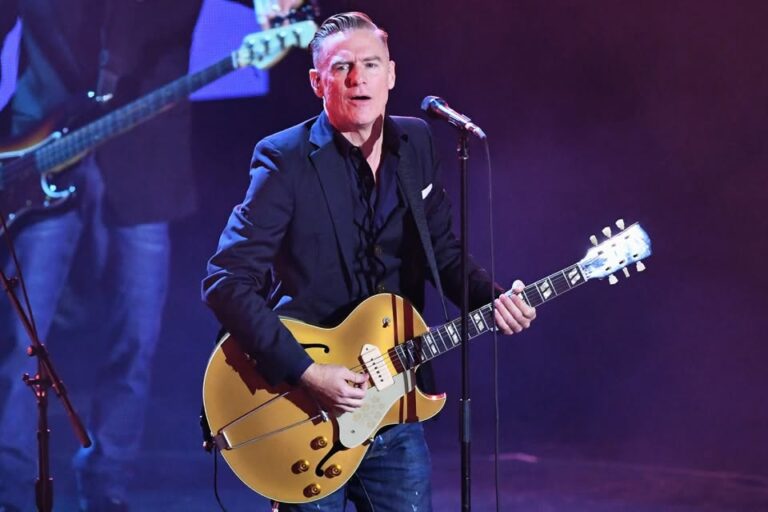 joi, 17 dec • 20:00Bryan Adams TicketsBt Arena Cluj
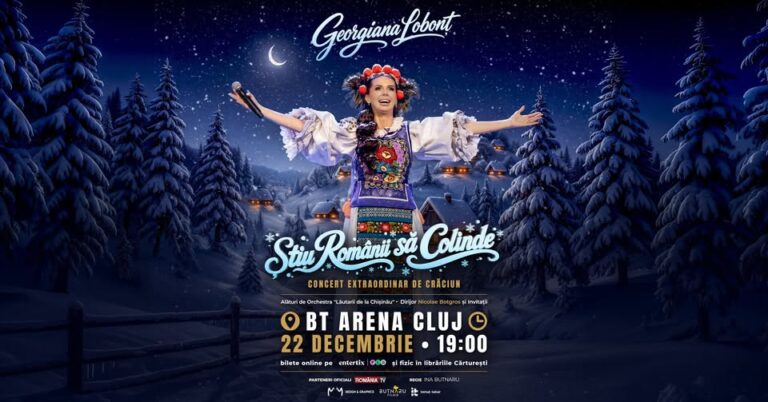 mar, 22 dec • 19:00Turneu Național “ȘTIU ROMÂNII SĂ COLINDE” Georgiana Lobonț – BT ARENA – Cluj NapocaBTarena Cluj-Napoca
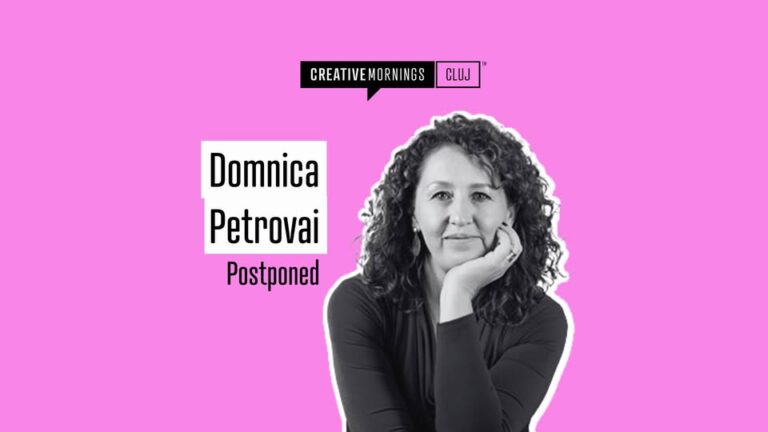 sâm, 30 ian • 09:30[POSTPONED] CreativeMornings Cluj with Domnica PetrovaiCloudflight Cluj (Henri Barbusse 44-46, Romania)
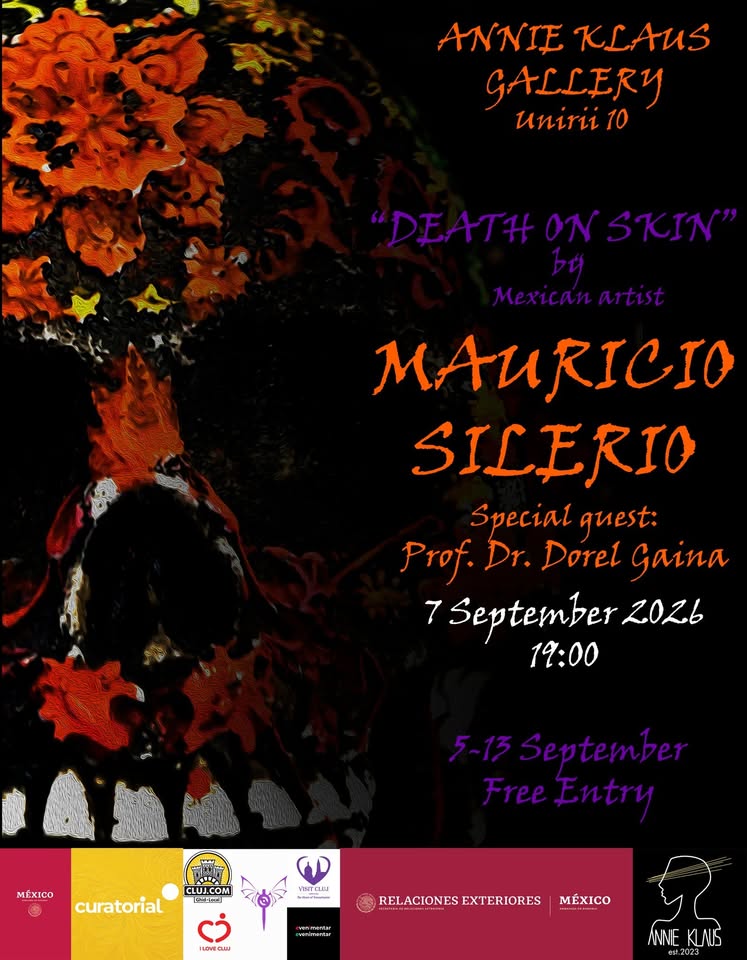 lun, 7 sep – dum, 13 sepDeath on skin/ Moartea pe pielePiata Unirii Cluj Napoca
 joi, 10 sep • 17:00Girls for a greener futureCalea Dorobanților 104, 400394 Cluj-Napoca, Romania
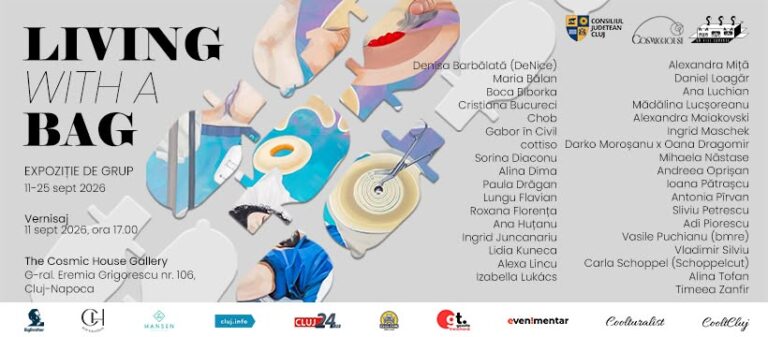 vin, 11 sep – vin, 25 sepLiving with a Bag / TheCosmicHouse / ClujThe Cosmic House Foundation
 vin, 11 sep – mar, 22 sepExpozitie SOLRINGEN – Borz Teodora 11 septembrie – 22 septembrie 2026str. Albac nr. 19, 400450 Cluj-Napoca, Romania
 vin, 11 sep • 18:30CE RĂMÂNE – Un atelier de artă și reflecție despre pierdere, sens și ceea ce ducem mai departe.Str. Take Ionescu, nr. 24 , Cluj-Napoca, Romania
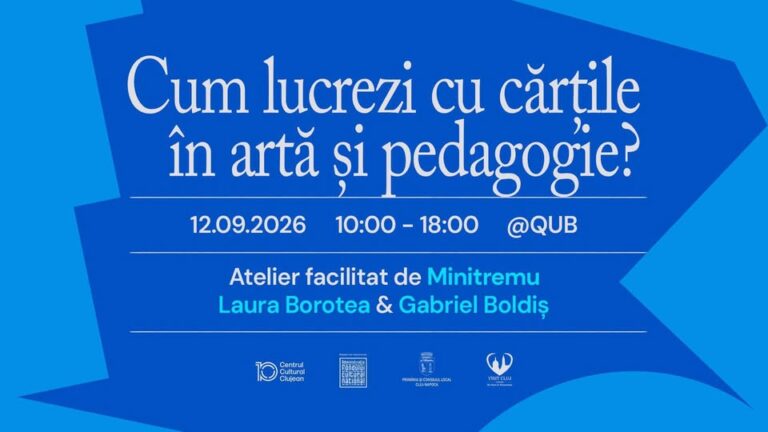 sâm, 12 sep • 10:00Atelier | Cum lucrezi cu cărțile în artă și pedagogie?Biblioteca Judeţeană "Octavian Goga" Cluj
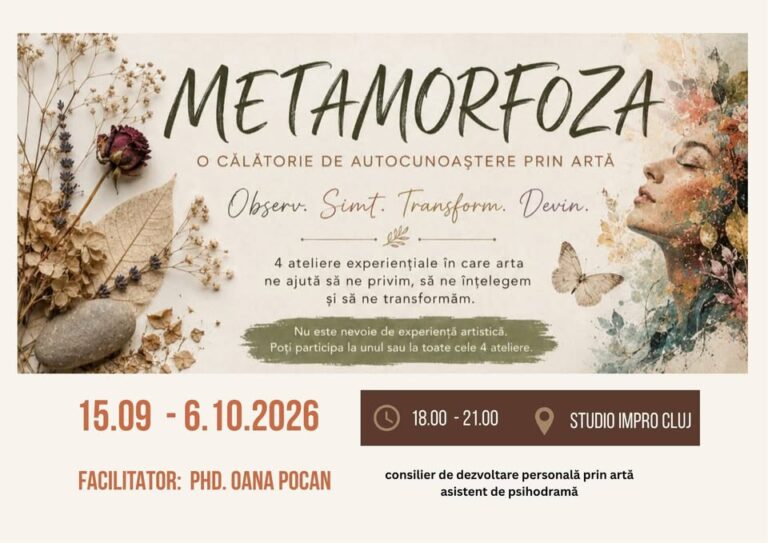 mar, 15 sep • 18:00Metamorfoza – Ateliere experențiale de autocunoaștere prin ArtăBD. 21 decembrie 1989 nr.36, ap.1, Cluj-Napoca, Romania
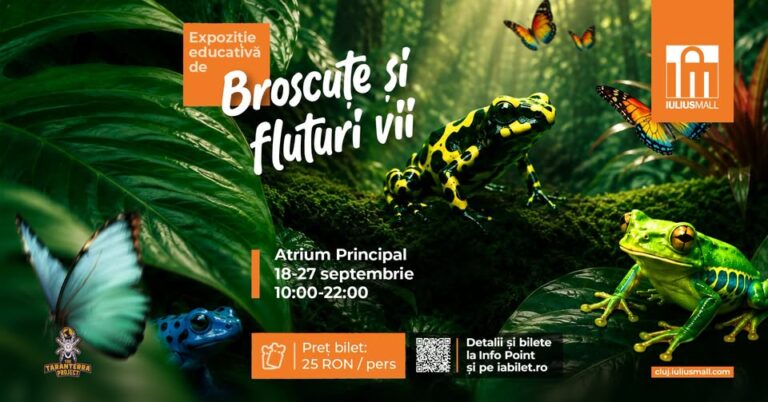 vin, 18 sep – dum, 27 sepExpoziție Educativă de Broscuțe și Fluturi ViiStr. Alexandru Vaida-Voevod, nr. 53B, 400436 Cluj-Napoca, Romania
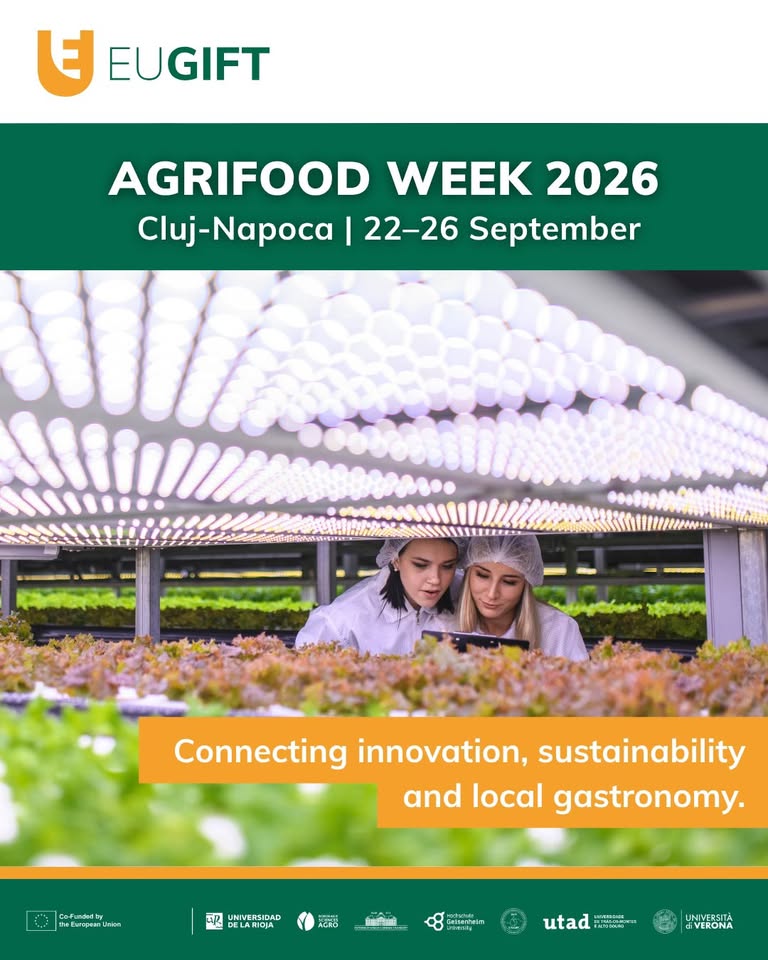 mar, 22 sep – sâm, 26 sep🌱 AgriFood Week 2026 – Cluj-NapocaUSAMV Cluj-Napoca
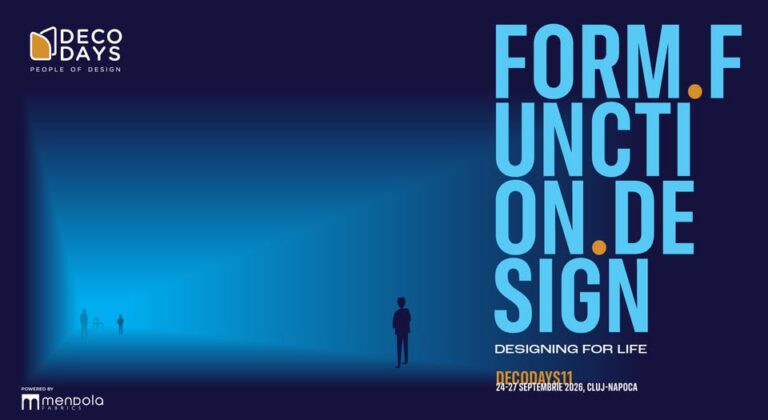 joi, 24 sep • 10:00Deco Days 2026Sala Polivalentă Cluj
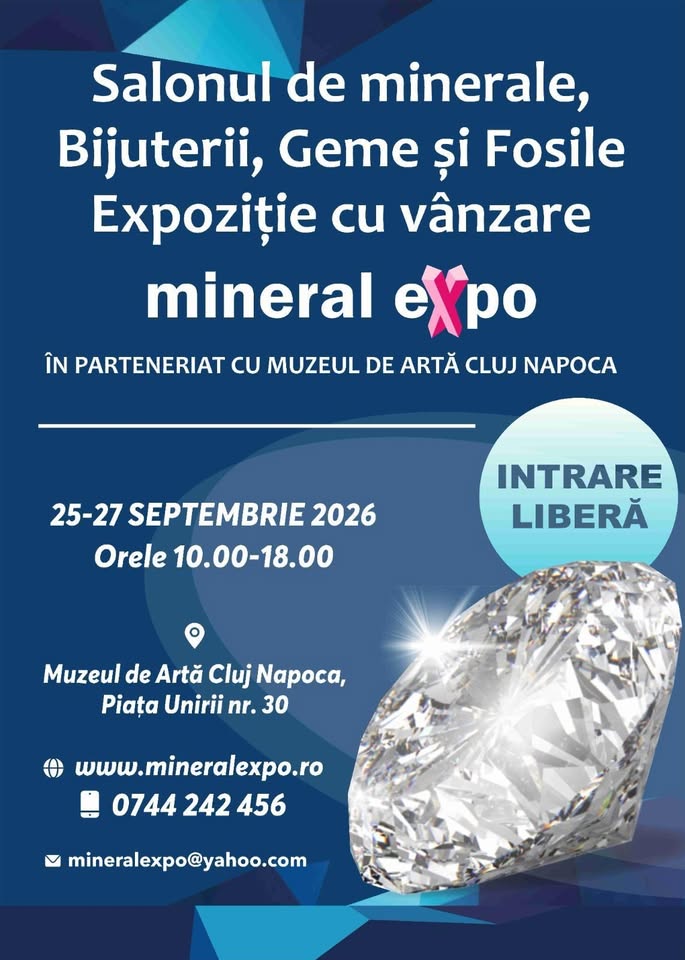 vin, 25 sep – dum, 27 sepSalon de minerale, Bijuterii, Geme și Fosile MINERAL EXPO Cluj-Napoca 2026Muzeul de Arta Cluj-Napoca
 mar, 8 sep – joi, 17 sepSalsa & Bachata Adulți începători din 8 SeptembriePiata Unirii, Nr.10, Etaj I-II, 400015 Cluj-Napoca, Romania
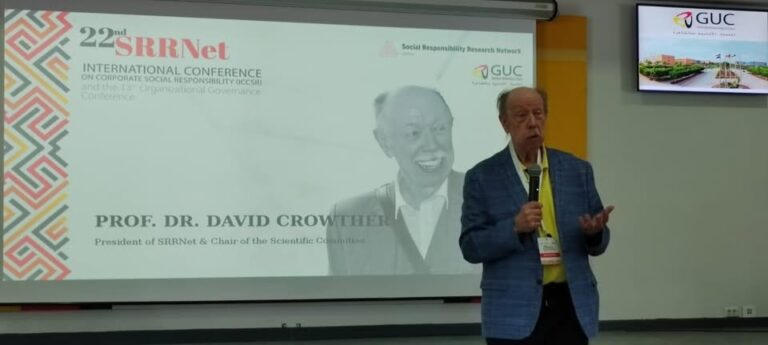 mie, 9 sep – sâm, 12 sep24th SRRNet Conference on Corporate Social Responsibility and SustainabilityUniversitatea Babeş-Bolyai
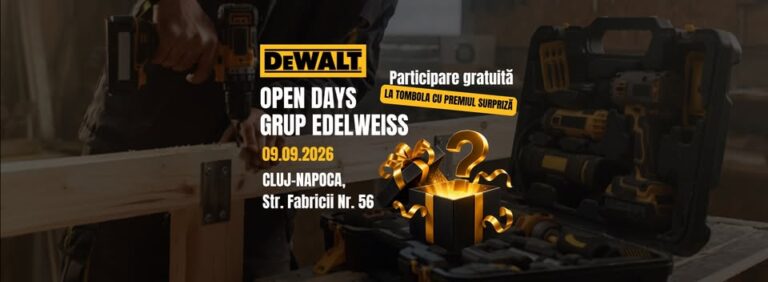 mie, 9 sep • 10:00DeWalt Open Days | Grup Edelweiss Cluj NapocaStr. Fabricii 56, 400394 Cluj Napoca
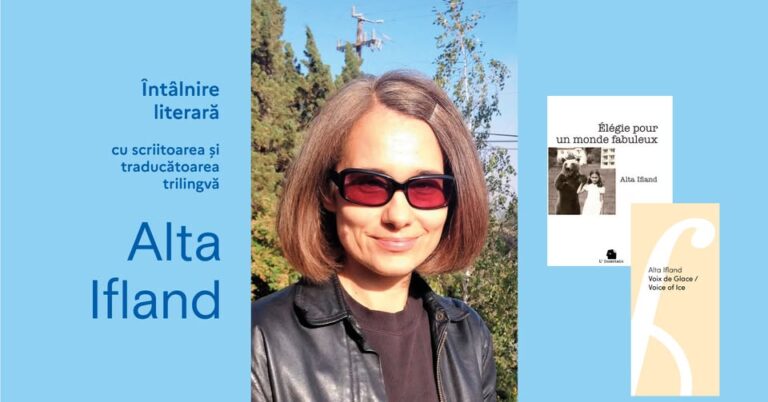 mie, 9 sep • 17:30Întâlnire literară cu scriitoarea și traducătoarea trilingvă Alta IflandI.I.C. Brătianu 22, 400079 Cluj-Napoca, Romania
 mie, 9 sep • 18:00Lansare Clinica FinanciarăStrada Regele Ferdinand numărul 5, etajul 1, Cluj Napoca, 400015
 mie, 9 sep • 19:00Curs de inițiere adulți- Retro, Blues și Disco FoxStrada Baba Novac nr 32, 400060 Cluj-Napoca, Romania
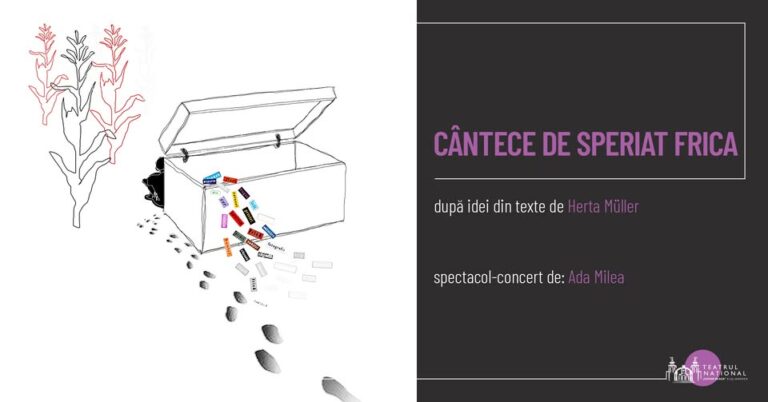 mie, 9 sep • 19:00CÂNTECE DE SPERIAT FRICATeatrul Naţional Cluj-Napoca
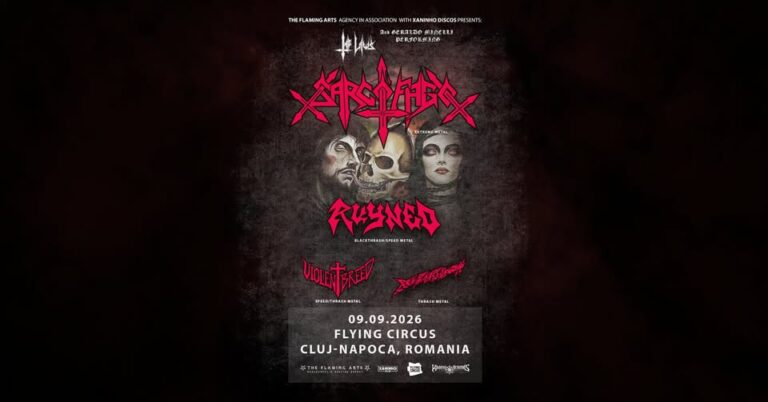 mie, 9 sep • 19:00SARCOFAGO // Ruyned / Beermagedon/Violent Breed live @ Flying CircusFlying Circus Cluj
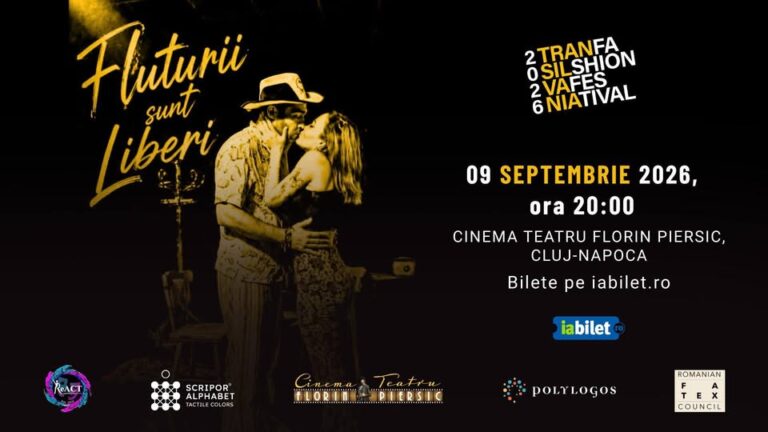 mie, 9 sep • 20:00„Fluturii sunt Liberi” – Piesa de teatru, parte a Transilvania Fashion Festival 2026Cinema Teatru Florin Piersic
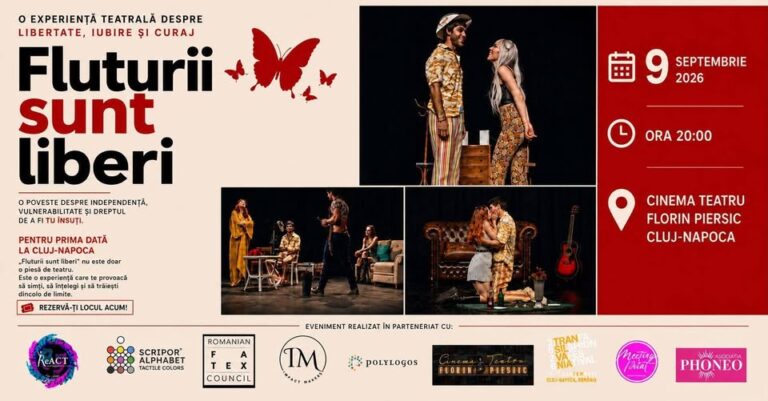 mie, 9 sep • 20:00Fluturii sunt liberi | 9 septembrie | Cinema Teatru Florin Piersic | Cluj-NapocaCinema Teatru Florin Piersic
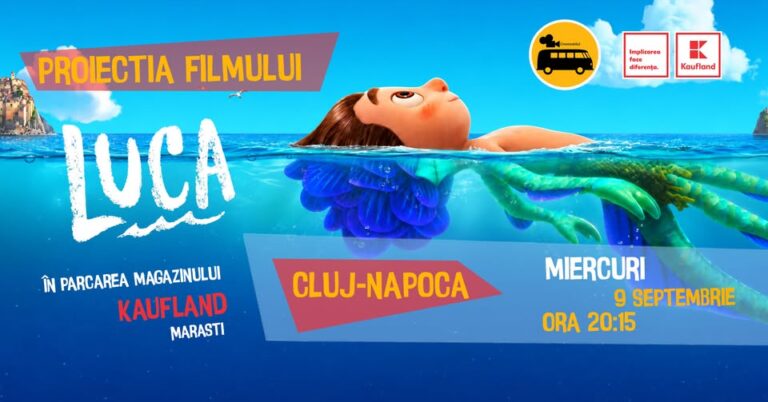 mie, 9 sep • 20:15Film în aer liber – Cluj-NapocaKaufland Cluj Marasti
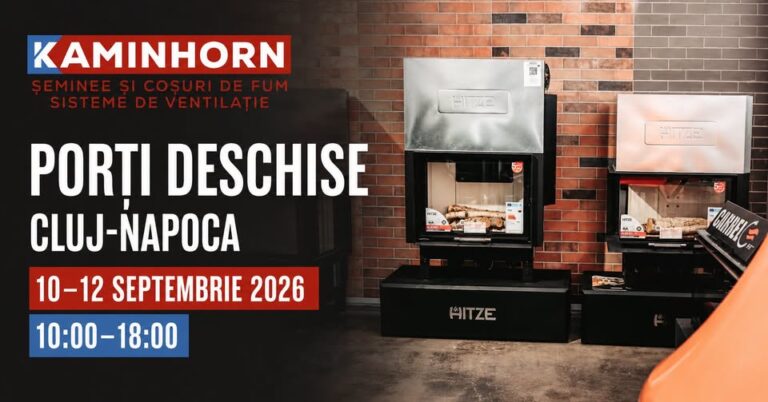 joi, 10 sep – sâm, 12 sepPORȚI DESCHISE SHOWROOM KAMINHORN CLUJ-NAPOCA – OFERTE UNICEStrada Tudor Vladimirescu, 400225 Cluj-Napoca, România